PLENUM BLACK · Division 28 · New York City
Commercial Access Control Installation in New York City
Scope tenant-suite doors, office entrances and lobby turnstile interfaces. Share the openings, existing platform and building requirements so we can match a suitable partner contractor.
- Door and lane schedules
- Card and mobile credentials
- Controllers and locking power
- Lobby and elevator interfaces
- Building-vendor coordination
- Acceptance and handover
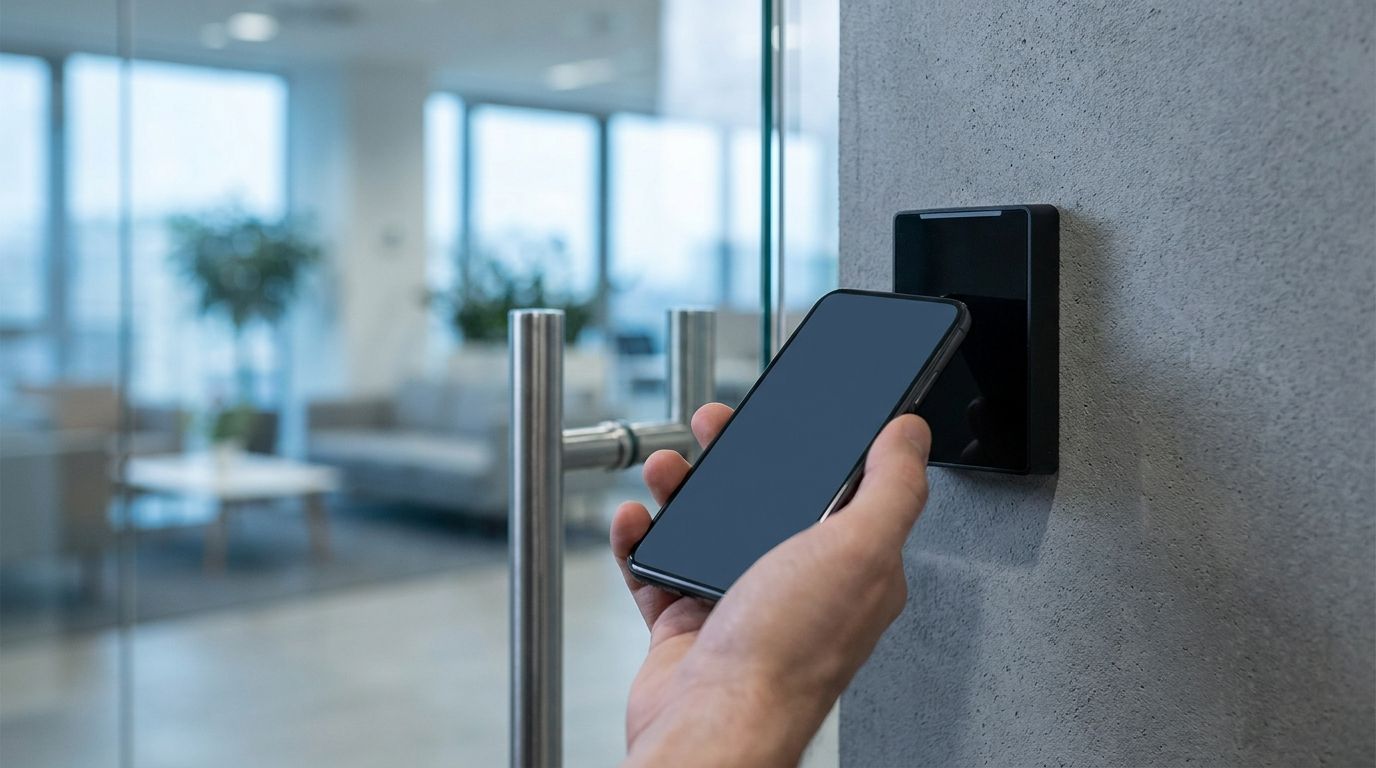
An NYC office access-control project can cross two ownership boundaries: the tenant controls its suite, while the landlord or building security vendor controls the lobby, turnstiles and elevator system. Identify the doors you need to change and the base-building interfaces you need to retain. A working badge at the lobby does not establish compatibility with a new suite reader.
Low Voltage New York is a statewide network of licensed, insured partner contractors. We scope commercial door access-control installation in New York City and match the requested work with a suitable crew. Separate door hardware, readers, controllers, cabling, software and building-vendor work in the proposal; confirm the proposed contractor's relevant credentials and system experience before award.
Access Control Systems where you are
New York City amended its turnstile provisions in Local Law 77 of 2023. Lobby equipment needs project-specific review of required egress, accessible routes and alarm interfaces, alongside the landlord's installation requirements. For a tenant fit-out, coordinate the access-control cable routes with the NYC structured-cabling scope and identify which contractor owns each pathway before closing walls.
Commercial locations in this region include Midtown and Hudson Yards office core, Financial District and World Trade Center campus, Downtown Brooklyn and the Brooklyn Navy Yard. Confirm the site address, building access and contractor availability when planning the schedule.
What the work includes
Build a door schedule before choosing a reader. For each opening, record the door and frame condition, existing lock, desired credential method, operating hours and who may enter. Keep lobby turnstile lanes on a separate equipment schedule so their power, mounting and interface work does not disappear inside a per-door allowance.
- Openings: suite entrances, staff-only doors and any lobby lanes included in the work; distinguish new installation from reuse.
- Existing platform: manufacturer and model, controller capacity, reader and credential types, software version and support owner.
- Infrastructure: proposed panel location, cable route, available power, network connection and space for expansion.
- Building interfaces: elevator dispatch, visitor management, video events and required alarm connections, with a named owner for each.
- Commercial handover: door and lane identifiers, settings records, administrator training and agreed acceptance checks.
Turnstile installation and access-control integration are separate scopes
A turnstile proposal needs an equipment model and lane layout as well as a credential system. Manufacturer documentation identifies model-specific passage widths, power needs, reader mounting and fire-alarm connection options. Confirm the actual configuration with the project designer and building team; a product feature list does not establish approval for a particular NYC lobby.
- Turnstile supplier: lane dimensions, mounting requirements, service access and the supported interface documentation.
- Building security vendor: permitted credential format, access permissions and the supported connection to existing systems.
- Project designer and responsible trades: required egress, accessibility, electrical and alarm work, including applicable approvals.
- Property manager: installation access, occupied-lobby arrangements and coordination with any elevator or visitor-management provider.
Compare the cutover and operating costs, not just the reader price
For an occupied Manhattan, Brooklyn or Queens office, agree how employees and visitors will enter while equipment changes. Ask the bidders to identify temporary access arrangements, the change window, acceptance witnesses and the conditions for restoring the previous setup. Do not assume that retaining the same card automatically retains every permission or integration.
- Price existing-door repair and new electrified hardware separately from the reader and controller.
- Identify software subscriptions, credential charges, integration licenses and continuing support responsibilities.
- State which legacy components will be reused, how their condition will be checked and what is excluded from the quote.
Agree on a door-by-door acceptance record
Write the acceptance plan before installation so the property manager, IT team and installing contractor know what must be demonstrated. Use approved test credentials and the agreed door schedule; qualified project personnel should perform any required life-safety tests under the building's procedures.
- Demonstrate permitted and denied entry, scheduled access changes and credential removal for the agreed openings.
- Check door-position reporting and selected visitor, elevator or video interfaces against the written scope.
- Record required alarm and power-loss test results where applicable to the approved design.
- Confirm who holds administrative access, receives fault notifications and owns support after handover.
FAQ
Access Control Systems in New York City — Questions
Can a tenant access-control system share credentials with NYC lobby turnstiles?
It depends on the credential technology, reader and controller support, software configuration and the base-building vendor's permissions. Supply the existing platform details and the intended route from lobby to suite. Confirm the supported integration and any licenses before equipment is ordered; a shared card is not a guaranteed shared permission system.
What should we send for a commercial access-control estimate in New York City?
Send the borough and building address, a door or lane count, the existing system if known, the intended use and your target work window. Include the landlord or security vendor's installation requirements. Describe the scope without sending passwords, live access codes or credential databases through the enquiry form.
Does every electrified door lock need the same fire-alarm connection?
No single wiring or release rule covers every opening and locking arrangement. The project designer and responsible contractors must establish the applicable requirements for the actual door, occupancy and hardware. Request that the proposal identify required alarm work, approvals and testing separately; do not select a maglock merely from a product description.
What belongs in a NYC turnstile installation quote?
Identify the equipment model, lane layout, mounting and power work, credential interface, building-system connections and acceptance responsibilities. Existing floor conditions, occupied-lobby access and the division of work between vendors can change the scope. Get a Free Estimate with the proposed location and lane count so those dependencies can be reviewed.
Project planning
Planning resources
NYC structured-cabling scope
Coordinate controller locations and cable pathways with the office fit-out.
Get a Free Estimate
Share the building, opening count, existing system and target work window.
NYC turnstile code context
Local Law 77 of 2023, section 152, amends the turnstile provisions. Project-specific design review remains necessary.
Boon Edam turnstile specifications
A manufacturer example of lane dimensions, power and access-control interfaces; no LVNY brand affiliation is implied.
Avigilon controller and panel guidance
Primary product information on reader capacity, locking power and expansion; not a universal compatibility statement.
Need access in New York City?
Share your building location, scope and timing. We will match your commercial enquiry with the appropriate partner contractor.