OM3 AQUA · Division 27
New York DAS Installer Network for Commercial Buildings
Scope cellular coverage and public-safety radio requirements for an office, campus or commercial building. Low Voltage New York matches the enquiry with the appropriate partner-contractor scope.
- Cellular coverage scoping
- Public-safety radio requirements
- RF survey and test deliverables
- Riser and equipment-room planning
- Carrier and agency coordination
- Documented closeout
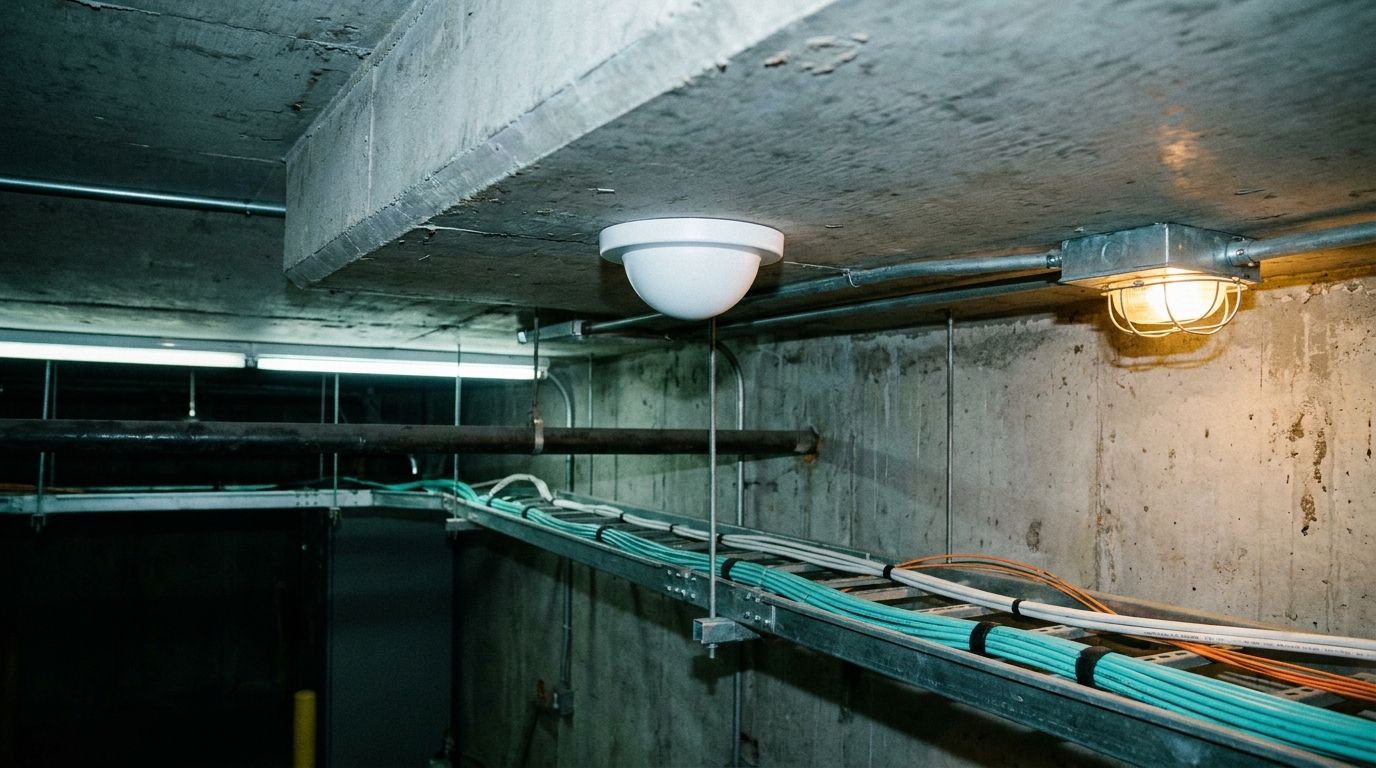
A distributed antenna system (DAS) uses antennas throughout a building to extend a radio signal. A New York DAS installer enquiry can start with two different problems: employees cannot maintain mobile calls inside a building, or a project team needs an emergency radio system accepted by the relevant authority. Describe the users and the affected spaces first. Tenant cellular service and public-safety radio have different signal sources, testing responsibilities and approval paths.
Low Voltage New York is a contractor network that scopes commercial enquiries and matches work with partner contractors. For DAS, the initial brief should identify the building location, project stage, coverage problem and existing documents. The proposed contractor's qualifications and assigned responsibilities must be verified for the actual system and jurisdiction.
Build a scope that a DAS contractor can price
Ask each bidder to identify the survey, design, construction and testing work included in its price. A proposal for installing antennas alone is different from one that includes engineering, signal-source coordination, filing and closeout. Name the responsible party for each stage before comparing totals.
The survey brief should distinguish existing conditions from the intended finished building. Record which floors and spaces need testing, whether construction is still changing the layout, and what equipment or carrier criteria the report must address.
- Building address, floor count, approximate area and below-grade spaces
- Cellular carriers or public-safety radio system involved
- Drawings, previous surveys and any agency deficiency
- Riser, ceiling, equipment-room and power access
- Occupied work windows and related construction by others
- Agreed test report, acceptance and maintenance handover
Cellular DAS: define carriers and occupied areas
Cellular DAS distributes a mobile-network signal through antennas serving the building. For procurement, identify the carriers and occupied areas that matter: interior offices, clinical spaces, loading areas or campus buildings may have different coverage needs. Record the desired service outcome and proposed test method rather than treating signal bars on one phone as the entire acceptance criterion.
Ask the proposed integrator to explain the signal source, architecture and required carrier involvement. Industrial signal boosters have specific FCC licensing or licensee-consent requirements; consumer booster rules are different. The FCC's signal-booster guidance is linked below. Have the provider identify the permissions and equipment category that apply to its design.
Public-safety radio: establish the jurisdiction first
Public-safety radio coverage concerns emergency responders' communications. An emergency responder radio communication system (ERRCS) must be scoped against the governing requirements and the actual radio system. Ask the authority having jurisdiction and the system operator what documentation and acceptance process apply before selecting a booster or antenna layout.
Outside New York City, begin with the applicable New York State code and local administration. The state's 2025 Uniform Code became effective December 31, 2025. A building's existing approval, alteration scope and local requirements still matter; a statewide service page cannot determine whether an individual building must install a system.
NYC ARCS has a specific FDNY approval path
New York City's Auxiliary Radio Communication System, or ARCS, serves Fire Department communications. Current references include 2022 Building Code Section 916, Fire Code Section 510 and rule 3 RCNY 510-01. Older application material may still show the previous numbering. The FDNY explainer linked below distinguishes the current requirements from legacy citations.
For an NYC bid, identify the registered design professional, proposed ARCS company and testing professional, then verify the relevant approvals and credentials. LVNY does not claim FDNY company approval itself. Cellular carrier coordination and FDNY ARCS acceptance should be identified as separate responsibilities when both systems are in the building.
Compare deliverables, exclusions and handover
An estimate should identify who supplies pathways, electrical work, equipment-room space and any other construction the radio design depends on. Ask how redesign, inaccessible areas, failed tests and additional attendance are handled. Equipment quantities alone do not show whether competing proposals cover the same work.
Set the closeout requirements before award: final drawings, agreed test data, equipment records, operating information and responsibility for ongoing inspection or service. Ask for a schedule tied to design review, equipment availability, access and acceptance milestones. Do not assume a generic number of weeks applies to every carrier, authority or building.
Projects to include in your scope
- Commercial cellular dead-zone investigations
- DAS scope for office, healthcare and campus projects
- NYC ARCS design, filing and testing coordination
- Public-safety radio scope and existing-system review
Related
Guides, codes & local pages
FDNY ARCS requirements and approvals
Current code references, company checks and the owner bid checklist
DAS installation in NYC
Plan separate FDNY radio and commercial cellular scopes
DAS projects on Long Island
Discuss the building, radio system and local authority
FDNY's current rules
Official July 2026 compilation: 3 RCNY 510-01
New York State code adoption
Official 2025 Uniform Code effective-date notice
FCC signal-booster guidance
Consumer and industrial equipment guidance; updated November 20, 2024
FAQ
DAS & ERRCS Installation — Common Questions
How do I choose a New York DAS installer?
Start with the system and jurisdiction. Ask who performs the survey and design, who obtains the required agency or carrier coordination, and who supplies the final test records. For NYC ARCS, verify the proposed company and testing professional against the applicable FDNY requirements. Compare written inclusions and exclusions before selecting a price.
How much does a DAS installation cost?
The price depends on coverage objectives, floor layout, signal source, equipment architecture, access, related construction and the required approvals and tests. Request a scoped estimate that separates survey/design, installation, work by other trades, acceptance and ongoing service. No building-specific price can be established from square footage alone.
What is the difference between cellular DAS and public-safety radio?
Cellular DAS serves mobile users on the included carrier networks. Public-safety systems serve emergency radio communications under the applicable jurisdiction's requirements. NYC ARCS is the city's dedicated FDNY radio framework. Specify both scopes if both needs exist; performance on one does not prove acceptance of the other.
Does a building with good mobile reception still need ARCS review?
Yes. Mobile reception and an ARCS requirement are separate questions. For an NYC project, have the design professional determine the applicable Building Code and FDNY requirements from the building and work scope.
Does every DAS need the same carrier approval?
No single approval description fits every signal source and equipment category. Ask the designer or integrator to identify carrier coordination, licensee consent and other permissions applicable to the proposed system. Industrial and consumer signal boosters have different FCC requirements.
What should the RF survey report include?
Agree on the frequencies or carriers, test areas, measurement method and decision the report must support. Identify inaccessible areas and the building's construction stage. A survey for tenant cellular coverage is not a substitute for the documentation required for an emergency-radio acceptance process.
How long does installation and acceptance take?
Ask for separate dates and dependencies for survey, design, review, equipment, site access, installation and testing. The contractor should identify which dates depend on a carrier, agency or another trade. A generic installation timeline cannot establish the completion date for your building.
What should I send to request a commercial DAS estimate?
Provide the address, approximate size and floor count, project stage, coverage concern and timing. Say whether drawings, an RF report or an agency deficiency are available. Get a Free Estimate so the enquiry can be matched to the appropriate partner-contractor scope.
Pricing a das & errcs installation project?
Share your building location, scope and timing. We will match your commercial enquiry with the appropriate partner contractor.