OM3 AQUA · Division 27 · Westchester & Hudson Valley
DAS Installation Contractors in Westchester & Hudson Valley
Serving White Plains, Yonkers, New Rochelle, Mount Vernon, Tarrytown and every commercial corridor in Westchester & Hudson Valley.
- ERRCS / public-safety DAS
- Cellular DAS (carrier-grade)
- RF benchmark surveys
- BDA and fiber DAS head-ends
- NFPA / IFC code compliance
- AHJ acceptance testing
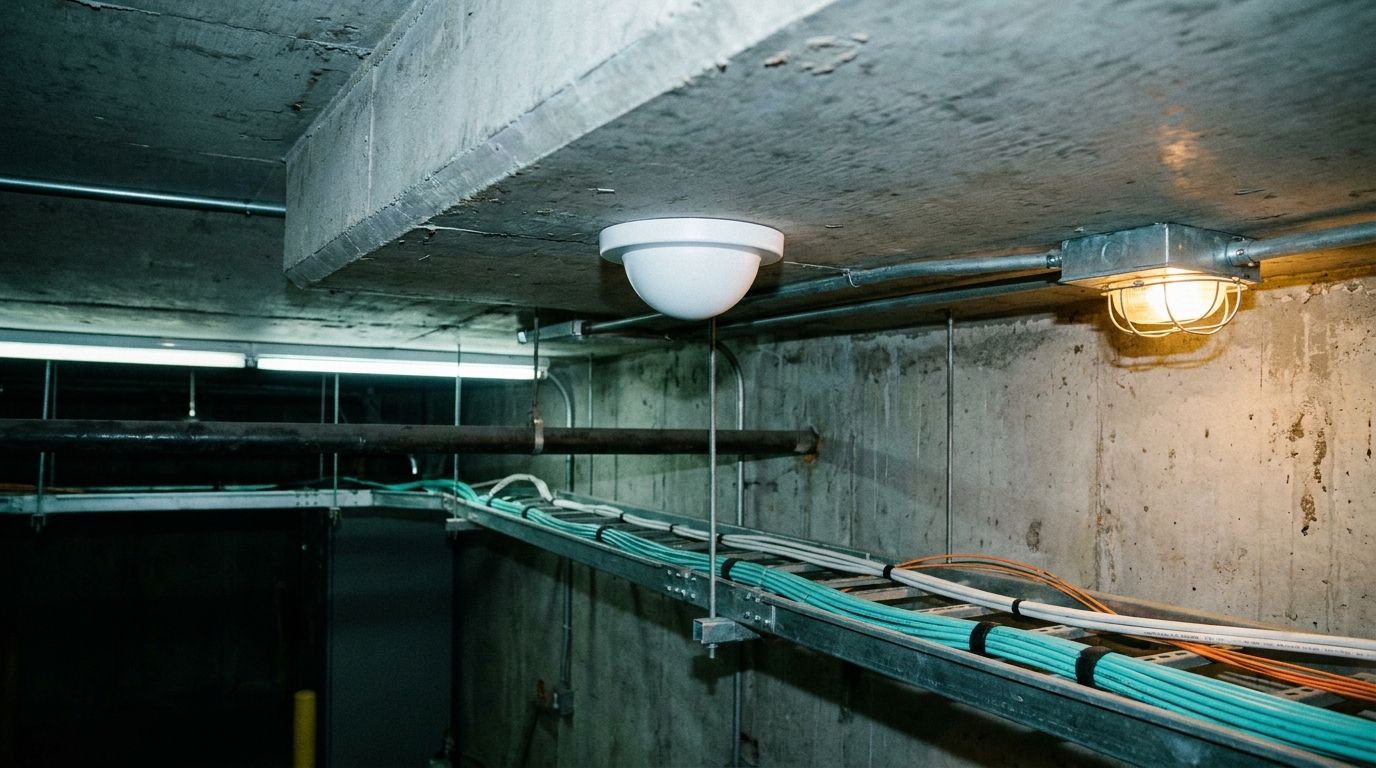
Westchester's building stock works against radio. The high-rise offices of downtown White Plains, the concrete-framed medical buildings clustered around the county's hospital campuses, and the energy-efficient glass going into every renovation all attenuate signal — for the cell carriers and for the fire department's radios alike. The fix splits into two systems: cellular DAS for the coverage tenants and clinical staff expect on their phones, and an emergency responder radio coverage system (ERRCS) where code requires that firefighters and police can communicate on every floor, in stairwells and below grade.
New York's statewide code adoption raised the stakes: the 2020 Fire Code of New York State carries Section 510, which requires approved emergency responder radio coverage in new buildings, with the local fire authority determining how coverage is verified and tested. Our partner crews take Westchester and Hudson Valley projects through the whole sequence — benchmark signal surveys, coverage design engineered in iBwave against the actual floor plans, BDA and antenna installation, and the grid testing and documentation the AHJ signs off on.
DAS & ERRCS Installation where you are
White Plains concentrates the county's ERRCS conversation: high-rise office and residential construction, hospital expansions and parking structures all draw coverage review, and each municipality's fire authority applies the standard with its own testing expectations. Our crews make the AHJ meeting the first project milestone on any das installation in Westchester — confirming frequencies, coverage thresholds and acceptance procedure in writing — because a system engineered to the wrong assumptions fails on test day, not design day.
Commercial locations in this region include Platinum Mile / I-287 corridor (White Plains–Harrison), Regeneron and the Landmark at Eastview campus (Tarrytown), Westchester Medical Center campus (Valhalla). Confirm the site address, building access and contractor availability when planning the schedule.
What the work includes
An ERRCS project starts with an RF benchmark survey: technicians walk the building with calibrated equipment and measure existing public-safety radio signal on the frequencies your county's first responders actually use. If coverage falls short of the code threshold, the fix is an engineered system — a donor antenna on the roof, a signal booster (BDA) or fiber-fed head-end, and a distributed antenna network sized to bring every required area up to signal. Code typically demands high coverage percentages in general areas and stricter coverage in critical areas, along with survivability requirements: two-hour fire-rated enclosures or pathways for key components, NEMA-rated equipment, battery backup, and annunciation to the fire alarm panel.
Partner crews design to the local AHJ's amendments — which vary meaningfully between, say, FDNY's ARC rules in New York City and a county fire coordinator's requirements upstate — and carry the FCC licensing coordination with the frequency license holder that BDA deployments legally require.
- RF benchmark surveys with grid-based signal documentation
- BDA and fiber DAS design engineered to your AHJ's requirements
- Two-hour rated pathway and enclosure survivability
- Battery backup and fire alarm panel annunciation
- Coordination with the frequency license holder and AHJ through acceptance
Related
More in Westchester & Hudson Valley
All services in Westchester & Hudson Valley
Every low voltage trade we cover in the region
DAS & ERRCS Installation statewide
Full scope, standards, and FAQs for this service
Get a Free Estimate
Share the building, scope and target date
FDNY ARCS code explainer
BC 403.4.4, BC 917/916, FC 511 — what owners learn late
What is a DAS system?
Cellular vs public-safety DAS in plain trade language
DAS installation in NYC
High-rise ERRCS/ARCS and cellular for the five boroughs
FAQ
DAS & ERRCS Installation in Westchester & Hudson Valley — Questions
Does a new commercial building in Westchester need an emergency responder radio system?
It needs approved responder radio coverage — Section 510 of the 2020 Fire Code of New York State applies to new buildings, and whether yours requires an installed ERRCS depends on how the structure tests against the local jurisdiction's signal levels. Concrete construction, below-grade levels and high-rise floors are the usual triggers. We survey early in design so the answer shows up in the budget, not at inspection.
Can DAS fix cellular dead zones in our White Plains office or medical building?
Yes. A benchmark survey maps which carriers fail and where — elevator lobbies, interior suites, imaging areas shielded by design — and the system is engineered to those specific gaps. In clinical buildings we install under facility protocols, and because the carriers must approve the signal source, we open that coordination while the design is still in progress.
Does my building actually need an ERRCS?
It depends on your jurisdiction, building size, construction type and occupancy — the trigger is usually new construction, substantial renovation or change of occupancy, at which point the AHJ requires proof of in-building responder radio coverage. In New York City, new high-rises must install ARC systems under FDNY oversight. The honest first step is a benchmark survey: if your building already meets coverage thresholds, you may need documentation rather than a system, and we'll tell you which.
What does a DAS or ERRCS installation cost?
Square footage, construction type and required coverage drive it. A single BDA with a modest antenna network in a mid-size building is a very different project from a fiber-fed system in a concrete tower with two-hour rated pathway throughout. Survivability requirements — rated enclosures, battery runtime, annunciation — add real cost to ERRCS that cellular systems don't carry. We survey first, then quote from measured data instead of assumptions.
Need das in Westchester & Hudson Valley?
Share your building location, scope and timing. We will match your commercial enquiry with the appropriate partner contractor.