SINGLE-MODE YELLOW · Division 27
Data Center Cabling Contractors in New York
Fiber and copper infrastructure for commercial data rooms, colocation spaces and campuses. Define ports, pathways, testing and live-site controls before installation.
- Copper and fiber scope
- Rack and port schedules
- Pathway and diversity planning
- Labeling and test reports
- Moves, adds and phased cutovers
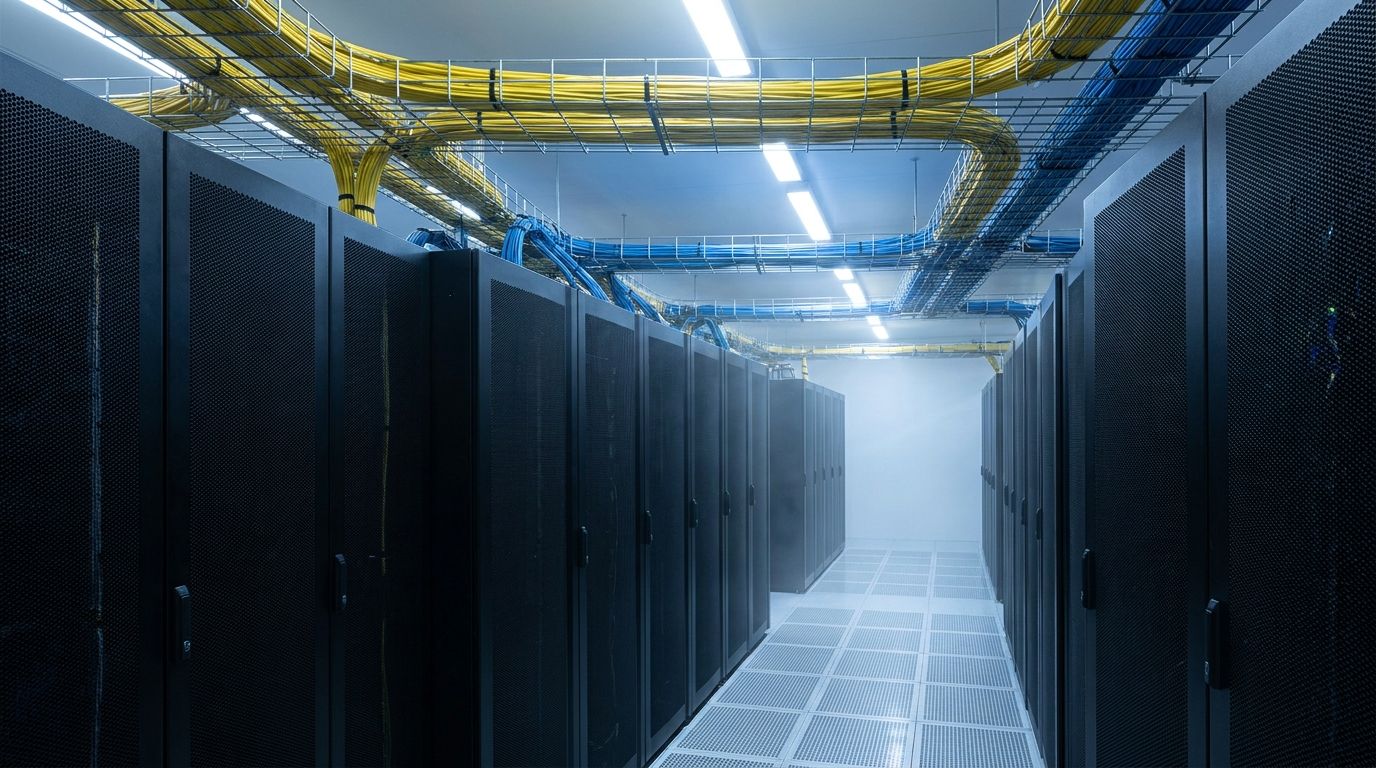
A data center cabling scope starts with a connection schedule: which racks and ports connect, what optics or interfaces will be used, and what performance must be demonstrated. Cable quantities follow those decisions. An equipment refresh in a live data room has different access and change-control needs from a new hall.
Low Voltage New York scopes commercial enquiries and matches them with partner contractors. Share the site, project stage, rack plan and intended handover requirements. The proposed installer and the owner’s engineering team should agree on media, pathways, labeling, test limits and cutover responsibilities before work is priced.
Build the cabling package from racks to test reports
Use a rack-to-rack connection schedule to make bids comparable. State whether the scope covers backbone trunks, cabinet patching, cross-connects, management networks or all of these. Separate passive infrastructure from active switches, optics and configuration.
- Rack identifiers, port counts and end-to-end connections
- Fiber type, connector and polarity requirements matched to the selected optics
- Copper category, channel design and intended equipment interfaces
- Primary and diverse routes, containment and access assumptions
- Labeling scheme, test methods, report format and acceptance owner
- Occupied-site method of procedure, outage windows and rollback plan
Define what a passing test means
Specify the applicable test standard and limit, link configuration, identifiers and report deliverables. For fiber, agree on inspection, cleaning, loss testing and any additional characterization required by the design. Copper certification should identify the test limit and the link under test.
Ask for the original test files and a report mapped to the installed labels. Resolve failed or marginal results under the project’s acceptance rules before the link is placed in service. Fluke Networks’ certification-report guidance is a useful reference for discussing copper results with the installer.
Coordinate pathways and live-site changes
Confirm cable-tray capacity, routing, rack entry and separation requirements with the owner’s design team. Where diverse paths are required, document their physical routes and common points. Two differently colored patch cords do not establish physical diversity.
For moves, adds and changes, require an approved work sequence, clearly identified connections, change authorization and a rollback decision. Protect existing services during staging and keep the final as-built schedule aligned with what was installed.
Use standards within the actual project scope
TIA-942 addresses data center infrastructure across telecommunications and related facility disciplines. Identify the applicable project specifications and edition in the design documents. A cabling contractor’s statement that work follows a standard is different from independent certification of a facility.
New York development announcements and the NYISO load queue can inform market research, but they do not establish a construction award or an available bid. Our pipeline tracker links its source data. A project-specific enquiry still needs an authorized buyer, current drawings and a defined procurement stage.
Projects to include in your scope
- Enterprise data-room cabling upgrades
- Colocation rack and cross-connect work
- Fiber backbone and campus interconnects
- Phased cabling for moves, adds and changes
Related
Guides, codes & local pages
Coverage
Data Center Cabling by region
New York City
Data Center in Manhattan, Brooklyn, Queens, Bronx & nearby
Long Island
Data Center in Hempstead, Melville, Hauppauge, Farmingdale & nearby
Central New York
Data Center in Syracuse, Utica, Rome, Liverpool & nearby
Western New York
Data Center in Buffalo, Rochester, Niagara Falls, Amherst & nearby
FAQ
Data Center Cabling — Common Questions
What is cabling in a data center?
It is the physical copper and fiber infrastructure connecting network, server, storage and supporting systems. A complete scope identifies connections, media, pathways, labels, tests and records, together with the site’s access and change-control requirements.
What should a New York data center cabling quote include?
It should identify connection quantities, media and connectors, routes, installation, labeling, tests, documentation and change-control requirements. State exclusions for active hardware, optics, power, design and configuration so each bid covers the same work.
Should we choose single-mode or multimode fiber?
Select fiber with the engineering team against reach, selected optics, required capacity and the existing infrastructure. Document connector, polarity and loss requirements. A contractor should price the design requirement rather than choose media from the site label alone.
Can installation take place in a live data center?
It requires the owner’s access and change-control process. Define the work sequence, connections at risk, outage allowance, testing, authorization and rollback plan before work begins. Confirm that the proposed contractor is qualified for the site’s requirements.
Does following TIA-942 mean a facility is certified?
No. A standard can be part of a project specification, while an independent certification has a defined assessment scope and process. Verify any certification claim with the issuing program. LVNY does not claim a facility certification for its contractor network.
What records should be delivered at handover?
Request as-built routes and connection schedules, labels aligned with test files, equipment/material records, unresolved issue tracking and acceptance signoff. Agree on the file formats and owner before installation begins.
Does a project in the NYISO queue mean cabling work is available?
No. Queue entries and development reports are research signals. Confirm project status, procurement authority, design readiness and a current bid opportunity before treating an entry as sales-ready work.
Pricing a data center cabling project?
Share your building location, scope and timing. We will match your commercial enquiry with the appropriate partner contractor.