CAT6 BLUE · Division 27 · New York City
Structured Cabling Contractors for NYC Commercial Fit-Outs
Turn your NYC floor plan into a comparable cabling bid: outlet counts, pathways, building responsibilities and agreed test records for a new commercial fit-out.
- Cat6 / Cat6A drops
- MDF / IDF planning
- Backbone and riser scope
- Outlet schedules
- Defined test deliverables
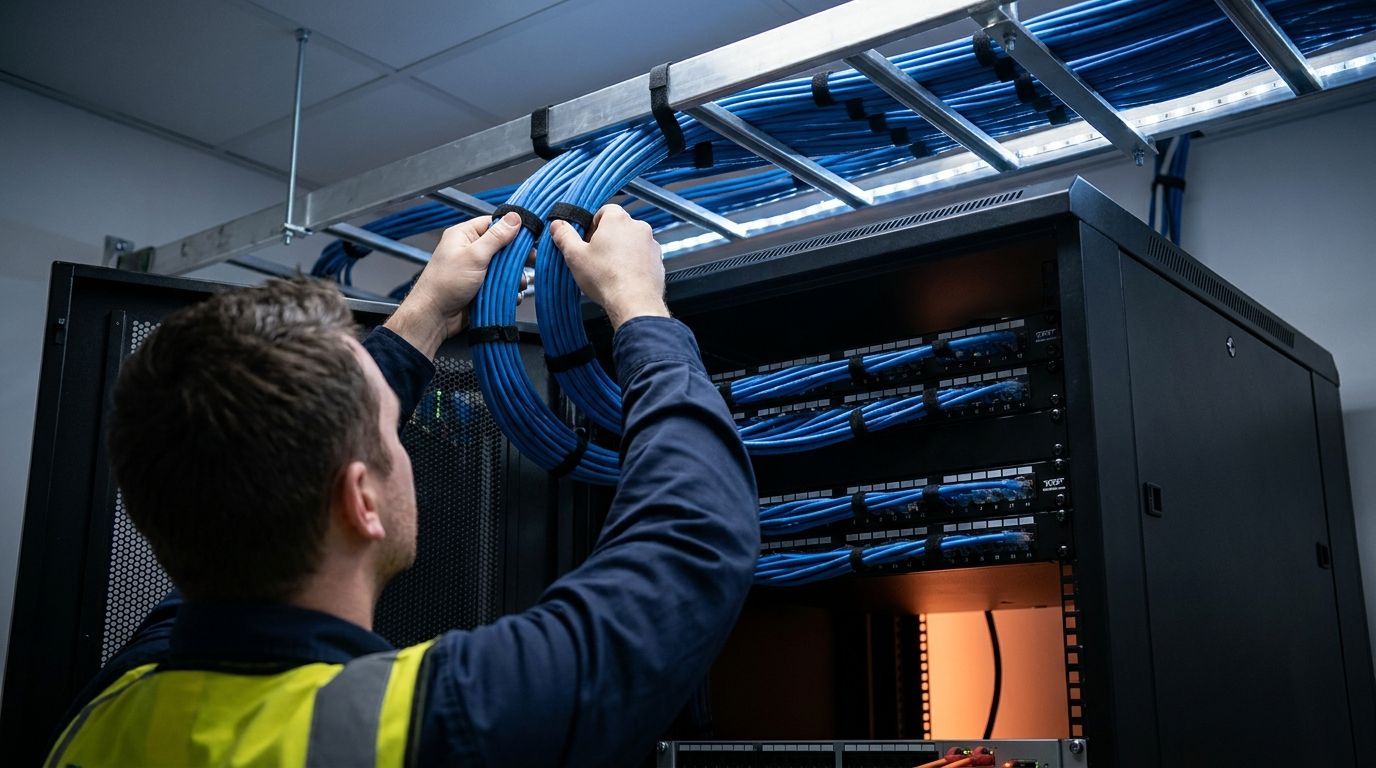
A structured cabling bid for an NYC tenant fit-out should describe more than a price per drop. The floor plan needs an outlet schedule, a route back to the telecom room, and an agreement on who supplies pathways, power and building access. For a GC, those decisions connect the Division 27 package to the ceiling, furniture and electrical work.
Low Voltage New York matches commercial cabling scopes with licensed, insured partner contractors. Include the borough, floor, proposed MDF or IDF location and the landlord’s contractor requirements. Union or non-union arrangements, permitted work hours and any base-building riser access should be resolved for the specific project before a start date is confirmed.
Structured Cabling where you are
A Manhattan floor with landlord-controlled risers and a Brooklyn fit-out with exposed routes may need different pathway and access allowances. Ask bidders to identify those assumptions on the same drawings. If your project mainly concerns undocumented outlets left by a previous tenant, use the NYC network cabling assessment to decide what can be retained before pricing a new installation. The Manhattan project checklist covers tenant and base-building responsibilities.
Commercial locations in this region include Midtown and Hudson Yards office core, Financial District and World Trade Center campus, Downtown Brooklyn and the Brooklyn Navy Yard. Confirm the site address, building access and contractor availability when planning the schedule.
What the work includes
Issue the same outlet schedule and marked plan to each bidder. Separate the horizontal runs within the tenant space from any riser or backbone work, and list dependencies that belong to the landlord, electrician, IT team or GC. That makes omissions visible without pretending two different scopes have the same installed price.
- Outlet and device schedule: desks, meeting rooms, APs, printers and other agreed positions
- Cable and termination schedule: category or fiber type, endpoints, patch panels and labeling convention
- Pathways: existing routes to reuse, new supports or sleeves, penetrations and firestopping responsibility
- Telecom rooms: rack layout, cable management, power and grounding responsibilities to be coordinated
- Closeout: agreed test limits and results, corrected drawings, cable schedules and defect resolution
Choose the acceptance evidence with the specification
Fluke Networks distinguishes basic connection verification, qualification for an application and certification against cabling standards. A passing link light does not establish category certification. State the required test type, configuration and limits in the bid, and ask for identifiable results tied to the outlet schedule. The manufacturer’s explanation is linked below.
If a system warranty is proposed, have the contractor identify its conditions and the documentation required. A tester brand alone does not establish that the installed system has a particular warranty.
Separate cabling from active equipment and building work
A complete estimate should say whether it includes switches, access points, patch cords, active configuration, electrical power, ceiling repair and abandoned-cable removal. Request priced alternates for uncertain items instead of treating them as included by implication. For multi-floor work, confirm the landlord or riser operator’s access process before ordering a backbone installation.
Related
More in New York City
All services in New York City
Every low voltage trade we cover in the region
Structured Cabling statewide
Full scope, standards, and FAQs for this service
Get a Free Estimate
Share the building, scope and target date
Structured cabling cost in NY
Per-drop ranges, Cat6 vs Cat6A, and prevailing-wage math
What is structured cabling?
Standards, hierarchy, and why ad-hoc wiring fails
Network cabling & MAC work
Moves, adds, changes and smaller copper scopes
FAQ
Structured Cabling in New York City — Questions
What is the difference between NYC structured cabling and a network cabling assessment?
This page covers a planned cabling package for a new fit-out or substantial build-out. An existing-plant assessment starts with what is already installed and determines what can be identified, tested, repaired or reused. The two scopes can be combined, but the inventory and new installation should remain clear in the proposal.
Can an NYC structured cabling project use union or non-union crews?
The network includes both options. Provide the actual building and contract labor requirements during scoping, along with insurance and access requirements. Confirm the proposed contractor meets those conditions before the schedule is committed.
Should every bidder price the same number of drops?
Use the same outlet and device schedule, but also compare pathways, cable specifications, terminations, testing and closeout. An identical drop count can conceal different assumptions about risers, penetrations, access or active equipment.
How do we request a structured cabling estimate for an NYC fit-out?
Share the building address, floor plans or outlet count, construction stage, GC contact and required handover date. Add the landlord’s access rules and known exclusions. Get a Free Estimate so the cabling scope can be matched to an appropriate partner contractor.
Project planning
Planning resources
Fluke: what cable certification establishes
Understand the distinction between connection checks and standards certification.
Commercial WiFi installation in NYC
Coordinate AP locations, cabling and wireless acceptance with the fit-out.
Structured cabling budget guide
Review scope inclusions before comparing budget ranges with a site-specific proposal.
Need cabling in New York City?
Share your building location, scope and timing. We will match your commercial enquiry with the appropriate partner contractor.